
The symbolism of lace
The Florios of SicilyThis flow traces lace as an object of labor, status, beauty, and family memory across the novel’s changing households.
increasing Bearing strength in each event
 decreasing
Bearing strength in each eventdecreasingA labor of patience

A labor of patience
Interwoven skill
The novel introduces lace as a painstaking craft requiring steady hands, patience, and sharp eyesight. Machine-made fabric threatens handmade work while increasing the status of rare, carefully made lace.
A measure of distinction
Lace appears in clothing and household celebrations as an item of refinement. Its value depends not only on appearance but on the labor and history woven into it.
The craft offers a contrast to the Florios’ mechanized industries: both transform raw material, but lace makes patient handwork visible.
A daughter’s wedding veil

A daughter’s wedding veil
A lavish celebration
Angelina Florio marries Luigi De Pace wearing a long lace veil commissioned by her father. The wedding signals wealth and a public celebration that Giulia herself never had.
Pride mixed with sadness
Giulia admires her daughter’s elegance but remembers how her own life began in secrecy and social disgrace. The veil represents what Angelina receives and what her mother was denied.
The wedding’s beauty cannot erase unequal histories, but it gives the next generation a more secure beginning.
A mother’s final gift
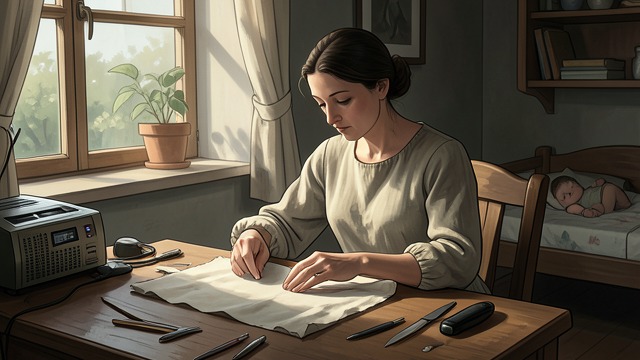
A mother’s final gift
Work beside the bed
As Vincenzo Florio lies ill, Giulia Portalupi Florio embroiders a christening gown for the child expected by her son and daughter-in-law. The work keeps her connected to the family’s next generation.
Continuity through craft
The gown links a private act of care to public inheritance and renewal. Even as Vincenzo’s life approaches its end, Giulia’s hands continue preparing for a child’s beginning.
Lace and embroidery become a quiet image of continuity: care is passed on through work that is delicate, repetitive, and difficult to see from outside.
Historical frame and 1840s
April 1854
September 1868
